Published Research

Winet, Yuji K. and Ed O’Brien (forthcoming), “Familiarity Seeking: Growing and Learning From Repeat Experiences,” in Handbook of the Science of Existential Psychology, ed. Kenneth E. Vail, Daryl Van Tongeren, Rebecca J. Schlegel, Jeff Greenberg, Laura A. King, and Richard M. Ryan, New York: Guilford Press.

The literature on meaning and personal growth has pointed to the obvious value of gaining exposure to new experiences, but what is perhaps less obvious is that meaning and personal growth can also be gained from repeat consumption of familiar stimuli and re-living familiar experiences. For example, people often choose to rewatch the same television shows and movies and plays, listen to the same songs again and again, go to the same cafés and bars every weekend, and reread the same cherished books multiple times throughout their lives. This chapter characterizes the construct of repeat consumption and argues that it is actually not as repetitive as one might think. Just as one can peel back an onion to reveal hidden layers, repeat consumption can lead to deeper appreciation of the meaningful and hedonic aspects of experiences. Repeat consumption creates opportunities to build a relationship with an experience, grasp the experiential value it has to offer, and notice features that previously went unnoticed. Repetition can reveal new things about experiences themselves (stimulus-level novelty), such as when people rewatch an epic movie trilogy and notice details or story plot connections they missed the first time (or have since forgotten about), and about oneself in the process (self-level novelty), shaping identity-relevant self-concepts (as it, e.g., signals something to the consumer about their deeper beliefs and values; “I must really like this; this is me”). This chapter reviews theoretical foundations and the growing literature on repeat consumption, and highlights future directions for research.

Winet, Yuji K. and Ed O’Brien (2023), “Ending on a familiar note: Perceived endings motivate repeat consumption,” Journal of Personality and Social Psychology, 124 (4), 707-734.

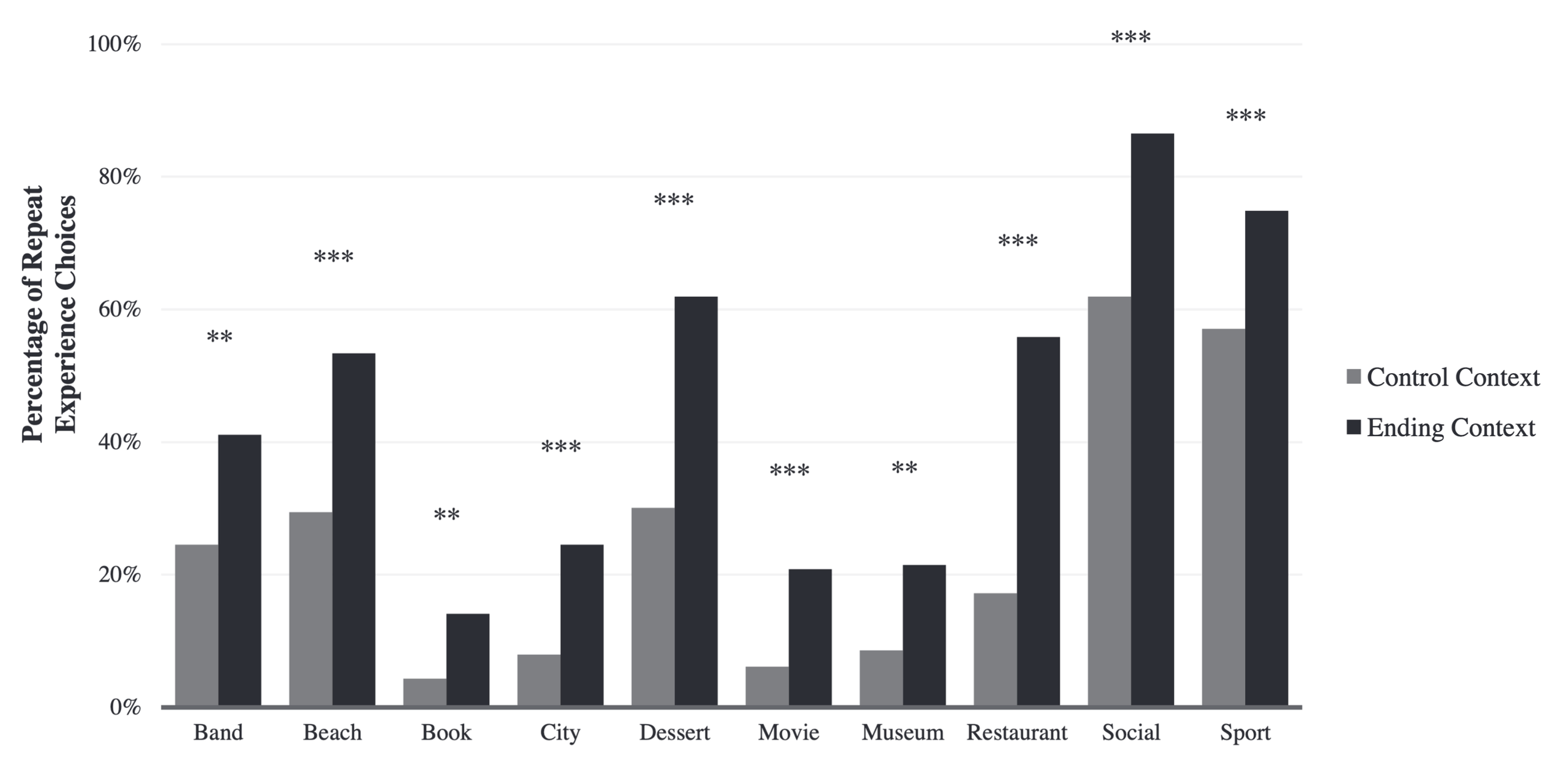
People fill their free time by choosing between hedonic activities that are new and exciting (e.g., exploring a buzzed-about restaurant) versus old and familiar (e.g., revisiting the same old spot). The dominant psychological assumption is that, holding constant factors like cost, availability, and convenience between acquiring such options, people will prefer novelty (“variety is the spice of life”). Eight preregistered experiments (total N = 5,889) reveal that people’s attraction to novelty depends, at least in part, on their temporal context—namely, on perceived endings. As participants faced a shrinking window of opportunity to enjoy a general category of experience (even merely temporarily; e.g., eating one’s last dessert before starting a diet), their hedonic preferences shifted away from new and exciting options and toward old favorites. This relative shift emerged across many domains (e.g., food, travel, music), situations (e.g., impending New Year’s resolutions, COVID-19 shut-downs), and consequential behaviors (e.g., choices with financial stakes). Using both moderation and mediation approaches, we found that perceived endings increase familiarity preferences because they increase people’s desire to ensure a personally meaningful experience on which to end, which returns to old favorites generally provide more than exploring novelty does. Endings increased participants’ preferences for old favorites even when it meant sacrificing other desirable attributes (e.g., exciting stimulation). Together, these findings advance and bridge research on hedonic preferences, time and timing, and the motivational effects of change. Variety may be the “spice of life,” but familiarity may be the spice of life’s endings.

Davenport, Diag and Yuji K. Winet (2022), “Pivotal voting: The opportunity to tip group decisions skews juries and other voting outcomes,” Proceedings National Academy of Sciences, 119 (32).

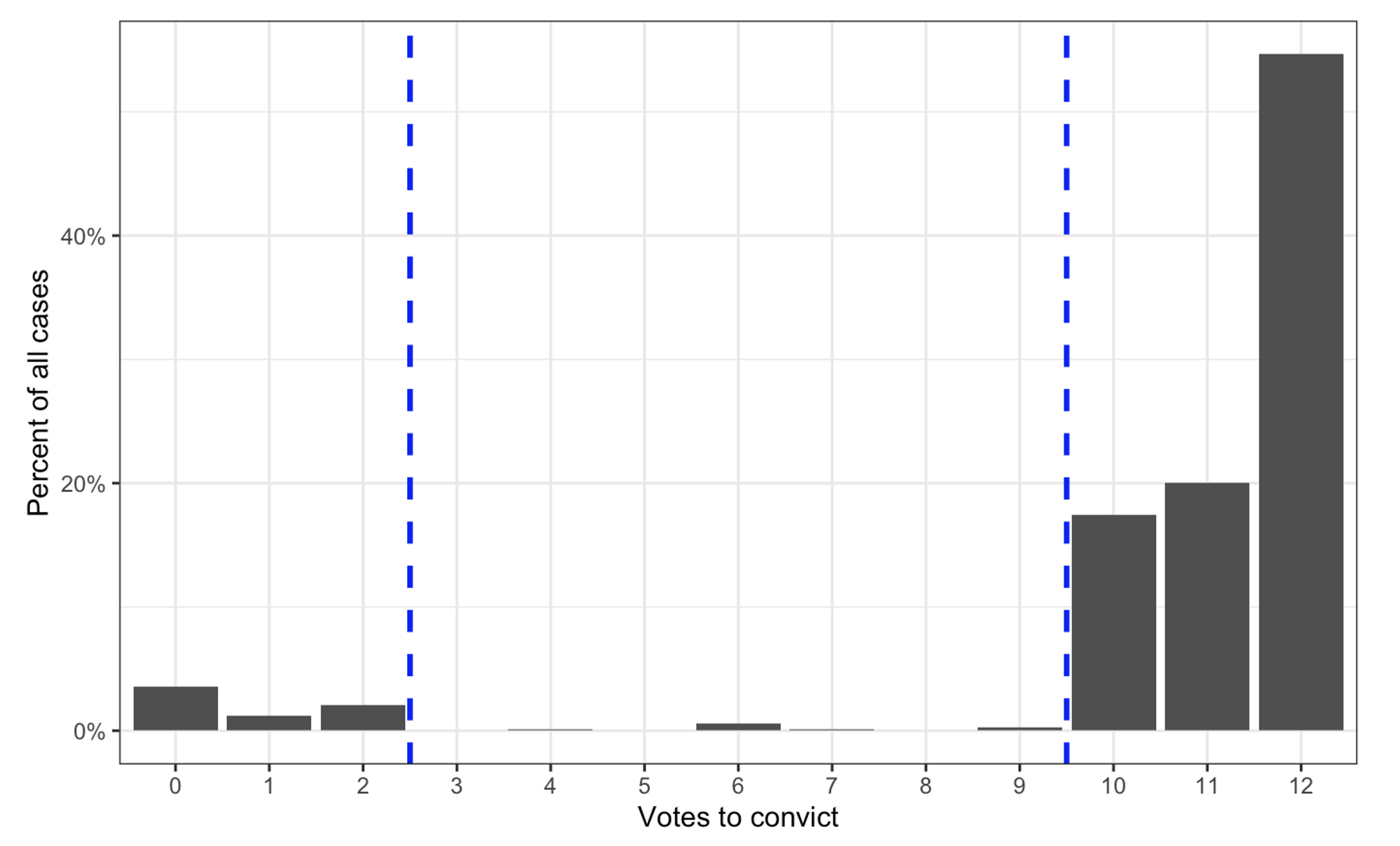
Many important social and policy decisions are made by small groups of people (e.g., juries, college admissions officers, corporate boards) with the hope that a collective process will yield better and fairer decisions. In many instances, it is possible for these groups to fail to reach a decision by not garnering a minimum number of votes (e.g., hung juries). Our research finds that pivotal voters vote to avoid such decision failure—voters who can “tip” their group into a punishment decision will be more likely to do so. This effect is distinct from well-known social pressures to simply conform with others or reach unanimity. Using observational data from Louisiana court cases, we find a sharp discontinuity in juries’ voting decisions at the threshold between indecision and conviction (Study 1). In a third-party punishment paradigm, pivotal voters were more likely to vote to punish a target than non-pivotal voters, even when holding social information constant (Study 2), and adopted harsher views about the target's deservingness of punishment (Study 3). Using vignettes, we find that pivotal voters are judged to be differentially responsible for the outcomes of their votes—those who ‘block’ the group from reaching a punishment decision are deemed more responsible for the outcome than those who “fall in line” (Study 4). These findings provide insight into how we might improve group decision-making environments to ensure that their outcomes accurately reflect group members’ actual beliefs and not the influence of social pressures.

*Winet, Yuji. K., *Yanping Tu, Shoham Choshen-Hillel, and Ayelet Fishbach (2022), “Social exploration: When people deviate from options explored by others,” Journal of Personality and Social Psychology, 122 (3), 427-442.

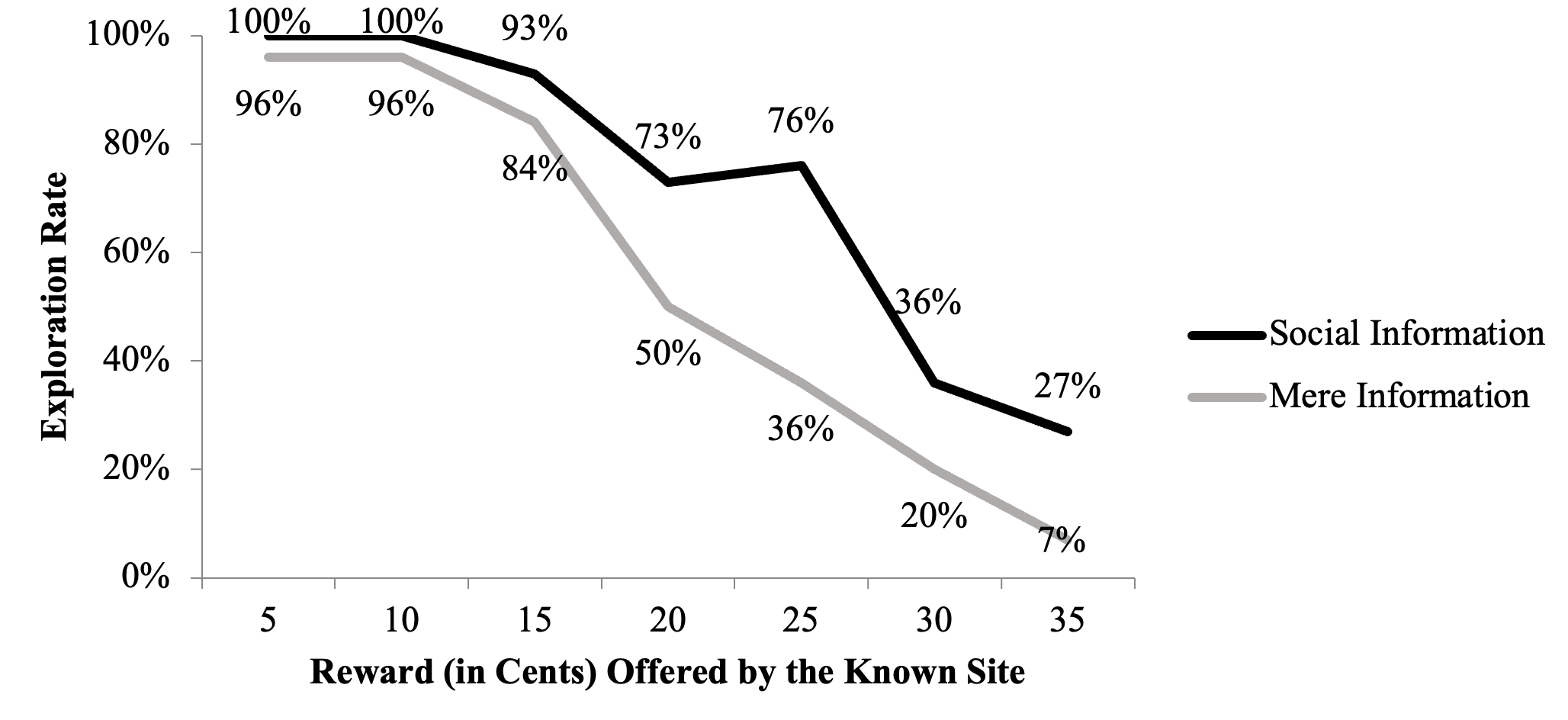
People often face choices between known options and unknown ones. Our research documents a social-exploration effect: People are more likely to explore unknown options when they learn about known options from other people’s experiences. Across four studies (N = 2,333), we used an incentive-compatible paradigm where participants chose between known and unknown options (e.g., cash bonuses). We found higher exploration rates (i.e., choosing of unknown options) when information about known options came from other people, compared with an unidentified source (Study 1a) or a computer (Studies 1b–4). We theorize that the social-exploration effect results from people’s tendency to intuitively adopt a group-level perspective with other people: a “we”-perspective. Thus, in social contexts, people explore more to diversify their experience as a group. Supporting this account, we find the effect attenuates in exploration of losses, where people do not wish to adopt a group-level perspective of others’ losses (Study 2). Furthermore, the effect is obtained only if others have experienced the outcome; not when they only revealed its content (Study 3). Finally, the social-exploration effect generalizes to everyday choices, such as choosing a movie to watch (Study 4). Taken together, these findings highlight the social aspect of individual exploration decisions and offer practical implications for how to encourage exploration.

*Joint first authorship

Working Papers

Winet, Yuji K. and Ed O’Brien (in preparation for Journal of Consumer Research), “Reinterpreting the familiar: Why callbacks enhance experiential consumption

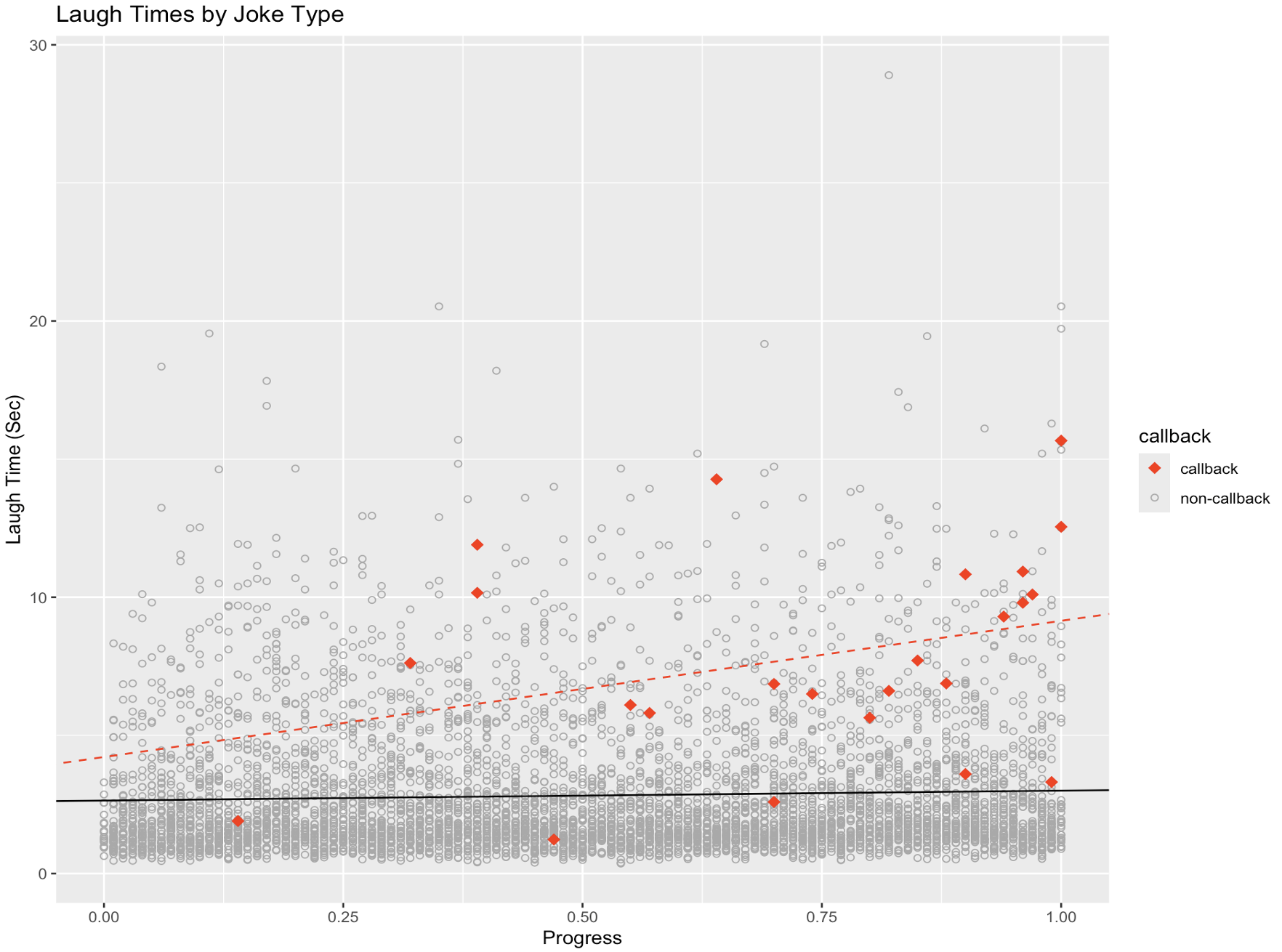
Consumers regularly navigate choices between novel and familiar experiences, yet little is known about how these elements might be most effectively combined within a single experience. As experiences unfold, novelty and familiarity vary dynamically—might certain configurations be more rewarding than others? Across seven studies (N = 4,255), we identify a particularly effective structure: the callback, in which familiar elements from earlier in the experience get introduced again later with new meaning. Using both observational and experimental methods, we show that callbacks enhance experiences across emotional (e.g., enjoyment, meaning), evaluative (e.g., star ratings), behavioral (e.g., willingness-to-pay, brand recall), and social (e.g., word-of-mouth) outcomes. These effects are driven by a heightened sense of closure, which fosters the perception of being well-guided through the experience. This work advances theory on novelty and familiarity seeking, sense-making, and experiential consumption, while offering actionable insights for designing more impactful, memorable, and shareable consumer experiences.

*Winet, Yuji K. and *Akshina Banerjee (in preparation for Journal of Consumer Research), “Asymmetrical Variety Seeking in Hierarchical Choice

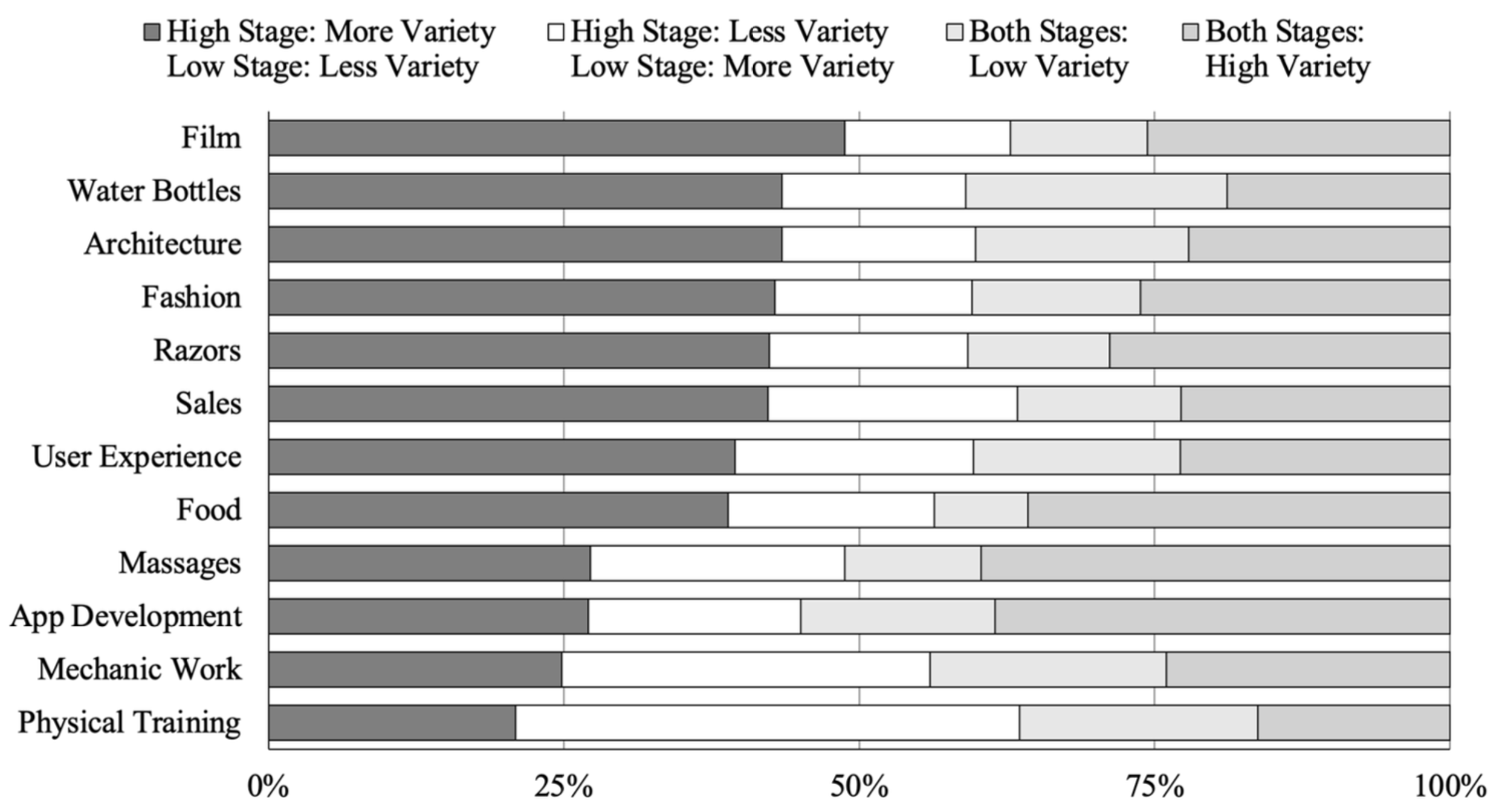
People frequently navigate hierarchical decision-making environments, where higher-level choices (i.e., restaurants) contain the available options at lower levels (i.e., lower levels). While variety-seeking is a well-established phenomenon in consumer research, little is known about how hierarchical positioning within multi-level choice structures influences variety-seeking behavior. Across a field dataset with 8,000 observations and eleven pre-registered experiments (N = 4,204), we document a robust hierarchical variety-seeking effect: people seek greater variety at higher levels of a choice structure and concentrate their choices at lower levels. By ruling out an alternative account of optimal stimulation, we show that hierarchical variety seeking is instead goal-directed: when participants’ goals shift from finding the best higher-level option to finding the best lower-level option, their allocation of variety changes accordingly. Together, these findings demonstrate that hierarchical positioning is not merely a contextual feature of decision environments but a psychological principle that shapes how people explore versus repeat across levels of choice.

*Winet, Yuji K. and *Diag Davenport (in preparation for Organizational Behavior and Human Decision Processes) “Responsibility Targeting Shapes Collective Moral Judgment

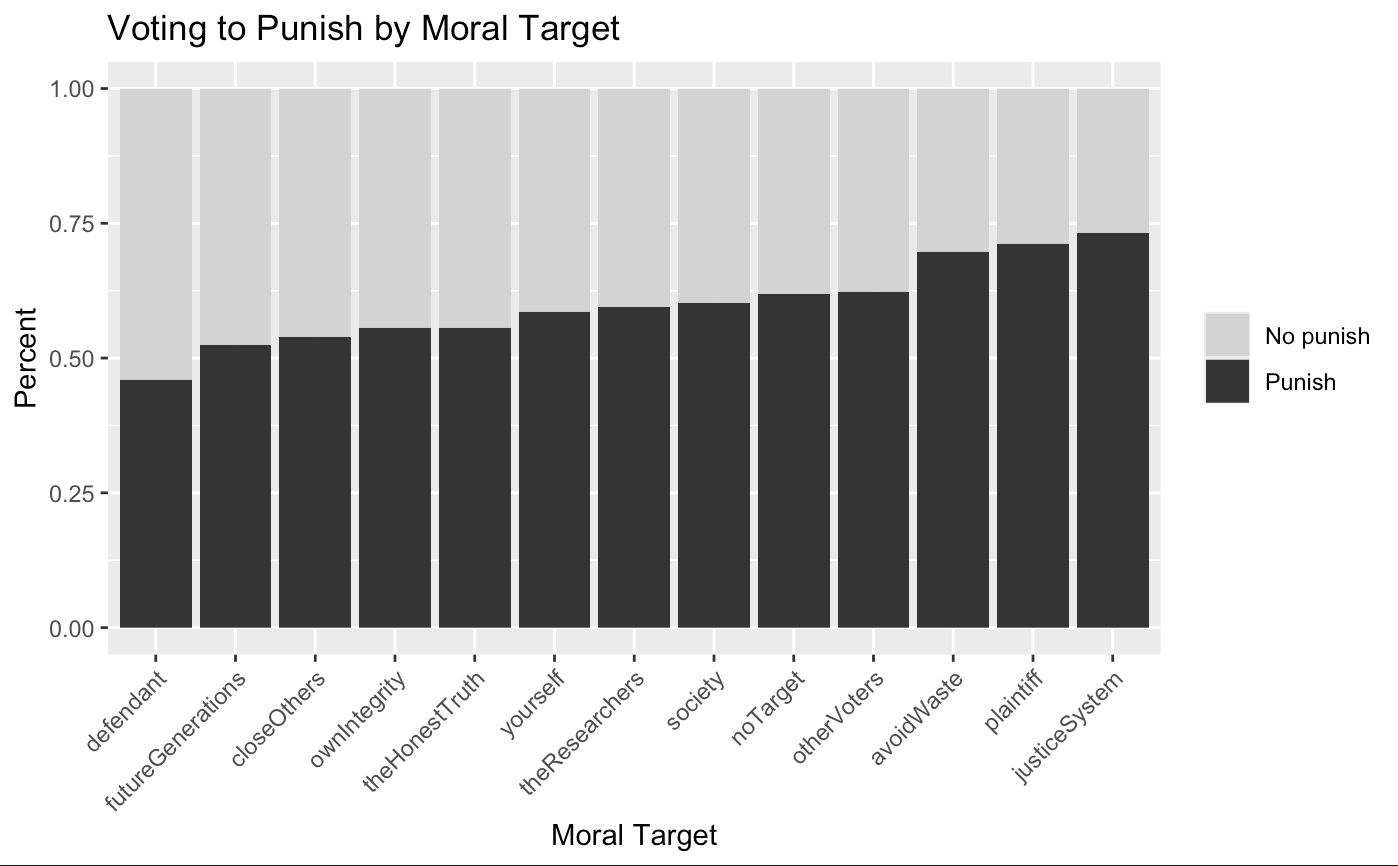
Moral decisions in groups depend not only on what people believe, but on who they feel accountable to. Across three preregistered experiments (N = 3,539), we introduce responsibility targeting—the process by which cues about one’s audience reshape collective moral decisions. In Study 1, emphasizing responsibility to fellow group members (vs. personal principles) increased punitive choices and perceived deservedness. Study 2 generalized this effect across twelve distinct audiences, with minimal cues shifting punishment rates by up to 40 percentage points. Study 3 tested whether these shifts reflect belief rationalization. We found no evidence of belief updating, suggesting that responsibility targeting operates through context-dependent accountability weights rather than post-hoc belief change. A simple formal model captures this mechanism: individuals maximize a weighted utility of integrity to personal principles and accountability to salient audiences, 𝑈=−𝜅(𝑦−𝑝)2−𝜆(𝑦−𝑎)2, where behavior—but not belief—moves with 𝜆. Together, these findings identify responsibility targeting as a distinct psychological mechanism linking audience structure to moral choice and reveal a tractable framework for predicting when moral judgments will bend to social accountability.